Composite Drainage Mesh
1. Strong drainage (equivalent to one metre thick gravel drainage).
2. High tensile strength.
3. Reduce the chance of geotextile embedded in the drainage channel, maintain long-term stable drainage.
4. Long-term withstand high-pressure load (can withstand about 300kpa compression load).
5. Resistant to corrosion, acid and alkali, long service life.
6. Construction is convenient, shorten the construction period and reduce the cost.
Product description
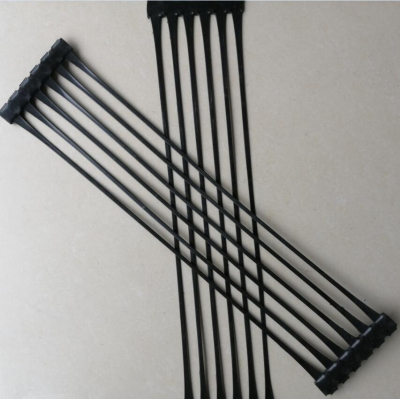
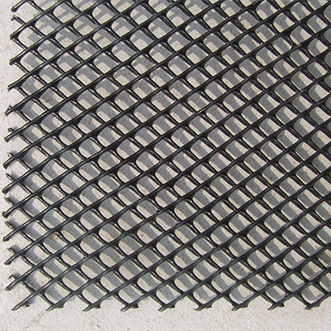
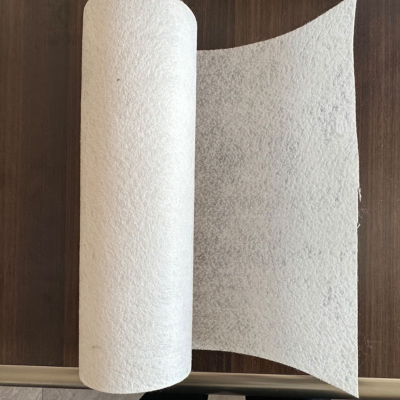
Composite drainage mesh is a new type of geosynthetics, which consists of a three-dimensional geonet core with needle-punched perforated non-woven geotextiles on both sides. Because of the combination of geotextile (anti-filtration) and geonet (drainage and reinforcement protection), it can provide a complete "anti-filtration - drainage - protection" effect.
The geonet core of the composite drainage network itself consists of a thick vertical rib and one diagonal rib at the top and one at the bottom. It rapidly drains groundwater from the road and has a pore maintenance system that blocks capillary water under high loads. And it is able to withstand high compression loads throughout its use and maintains a considerable thickness to provide good hydraulic conductivity.
Specification of drainage mesh
Core thickness: 5mm~8mm, width 2~4m, compound can be polyester staple fibre needled geotextile, filament anti-adhesive needled geotextile, high strength polypropylene staple fibre needled geotextile, the grammage of the composite fabric is generally 200 grams, and the length can be according to the requirements of the project.

Product Performance
1. Laid between the foundation and the sub-base, it is used to drain the water accumulated between the foundation and the sub-base, blocking capillary water and effectively incorporating it into the edge drainage system. This structure automatically shortens the drainage path of the foundation, the drainage time is greatly reduced, and the number of selected foundation materials used can be reduced (i.e., materials with more fines and lower permeability can be used). The service life of the road can be extended.
2. In the sub-base laying three-dimensional composite drainage network can prevent the sub-base of fine materials into the ground base (that is, play a role in isolation). Aggregate base layer will enter the upper part of the geotechnical network to a limited extent. It also has the potential to limit the lateral movement of the aggregate base, in this way acting similarly to the reinforcing effect of a geogrid. Generally speaking, the tensile strength and rigidity of three-dimensional composite drainage network is superior to many geogrids used for foundation reinforcement, and this limiting effect will improve the support capacity of the foundation.
3. When the road is aged and cracks are formed, most of the rainwater will enter the section. In this case, the three-dimensional composite drainage network is laid directly under the road surface instead of the drainable foundation. The 3D composite drainage network can collect the moisture before it enters the foundation/sub-base. And a membrane can be wrapped around the bottom of the 3D composite drainage network to further prevent moisture from entering the foundation. For rigid road systems, this structure permits the design of roads with higher drainage coefficients Cd. Another advantage of this structure is that it may be possible to hydrate the concrete more uniformly (research on the extent of this advantage is ongoing). Whether for rigid or flexible road systems, this structure can extend the life of the road.
4. In northern climates, the laying of 3D composite drainage networks can help to mitigate the effects of frost heave. If the depth of freezing is deep, the geonet can be laid in a shallower position in the sub-base as a capillary action blockage. It is also often necessary to replace the sub-base with a granular sub-base that is less susceptible to frost heave, extending down to the depth of the freeze. The frost-swellable backfill can be filled directly on top of the 3D composite drainage network up to the foundation ground line. In this case, the system can be connected to a drainage outlet so that the water table is at a depth equal to or below this depth. This can potentially limit the development of ice crystals and eliminate the need to place restrictions on traffic loads during spring ice melt in cold regions.