Eco-Friendly Filament Geotextile
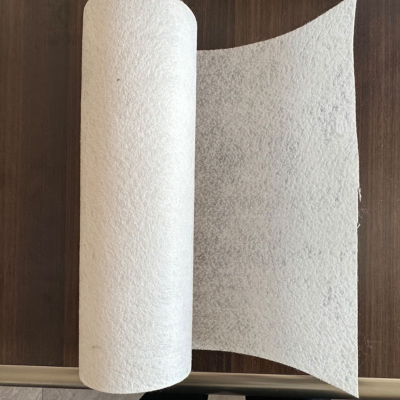
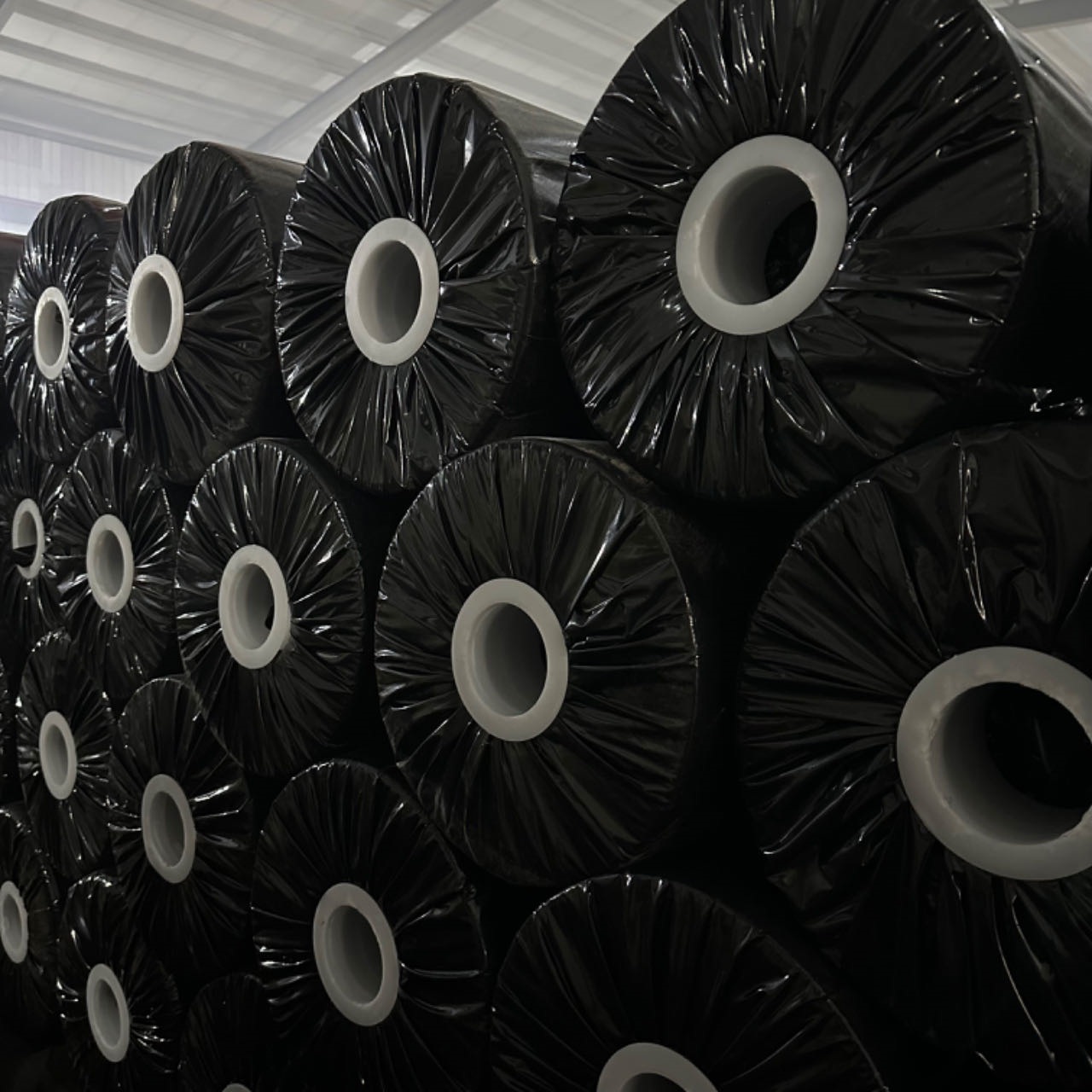
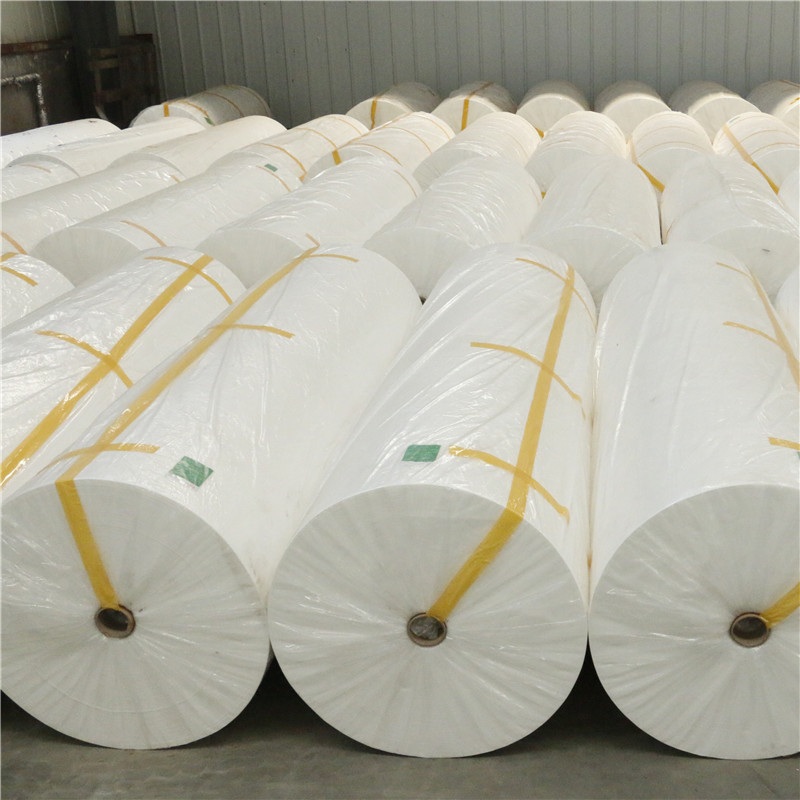
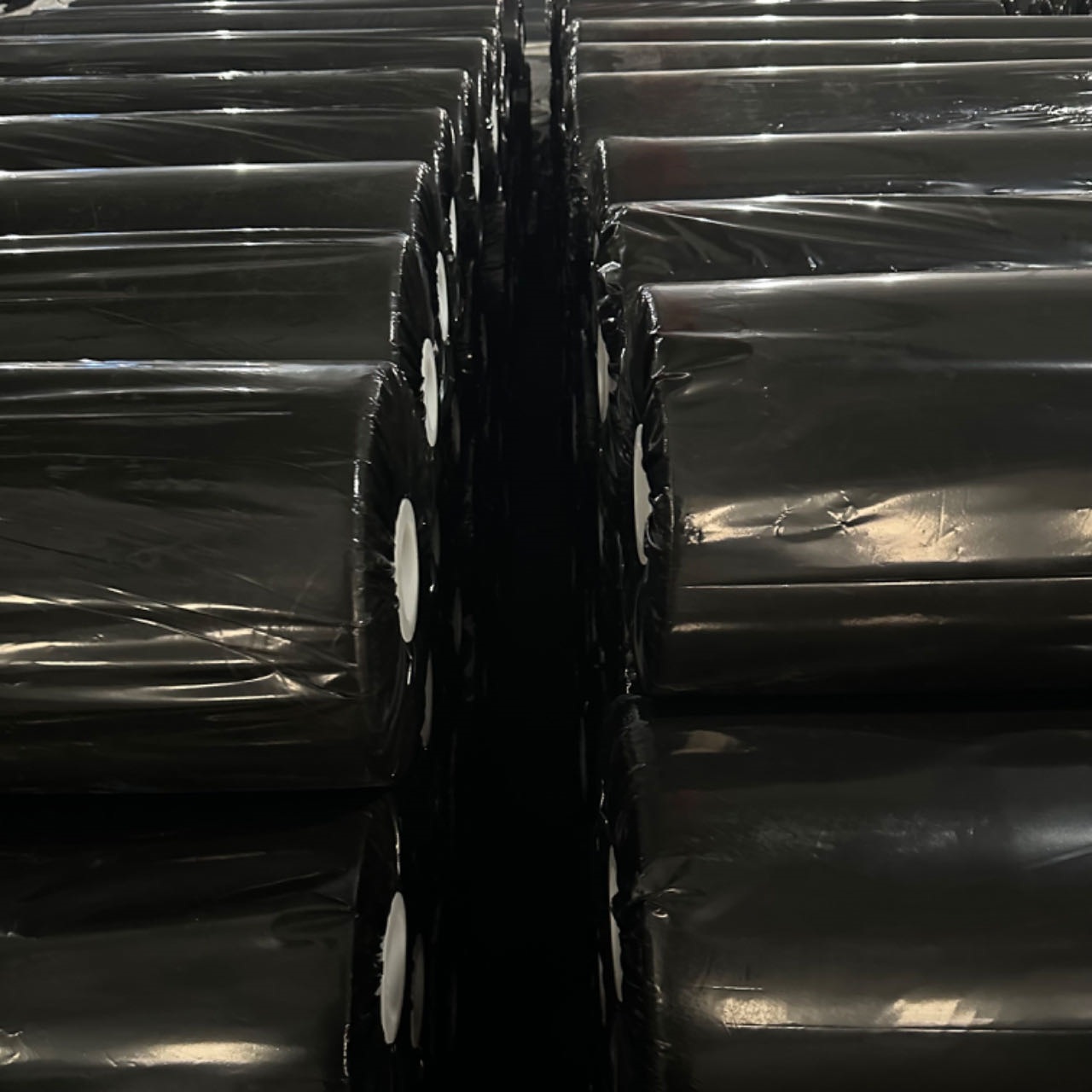
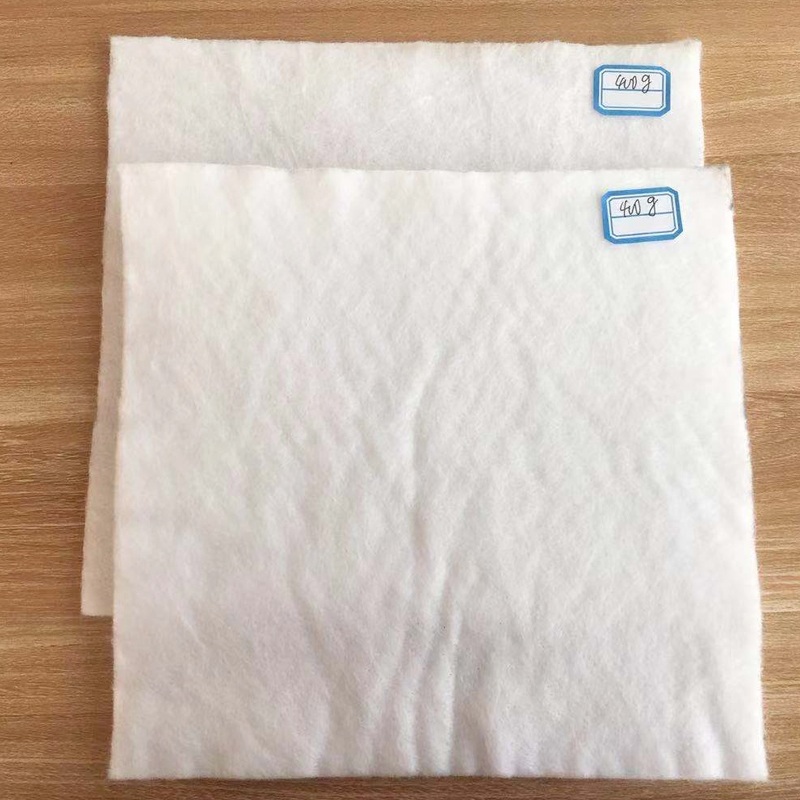
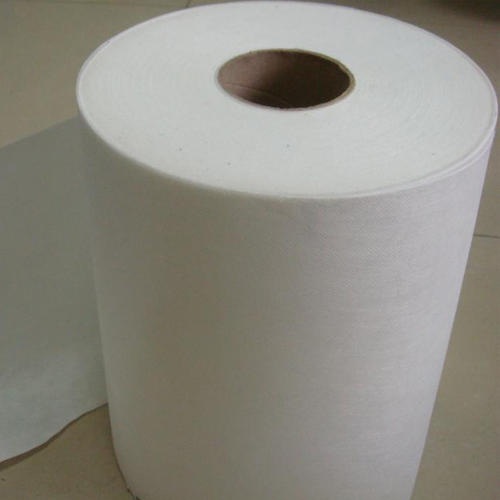
Eco-Friendly Filament Geotextile, made from polyester chips, delivers superior stability, high strength, and wear resistance. With advanced processing technology and polyester composition, it offers exceptional heat resistance up to 230 degrees without shrinkage, surpassing ordinary geotextiles. Featuring moth, abrasion, and UV resistance, it excels in anti-aging performance. Additionally, it provides excellent air permeability, ensuring water drainage and strong permeability compared to standard geotextiles.
Eco-Friendly Filament Geotextile Product description
1, water repellency. Eco-Friendly Filament Geotextile, according to the grams of large and small different nonwoven fabrics water repellent performance is also different. The larger and thicker the weight, the better the water repellency. If there are water drops on the surface of the nonwoven fabric, the water droplets will slide off directly from the surface.
2, high temperature resistance. Because the melting point of polyester is around 260°C, it can maintain the stable performance of the shape and size of the nonwoven fabric in the environment where temperature resistance is needed. It has been widely used in heat transfer printing, transmission oil filtration, and some composite materials that require high temperature resistance.
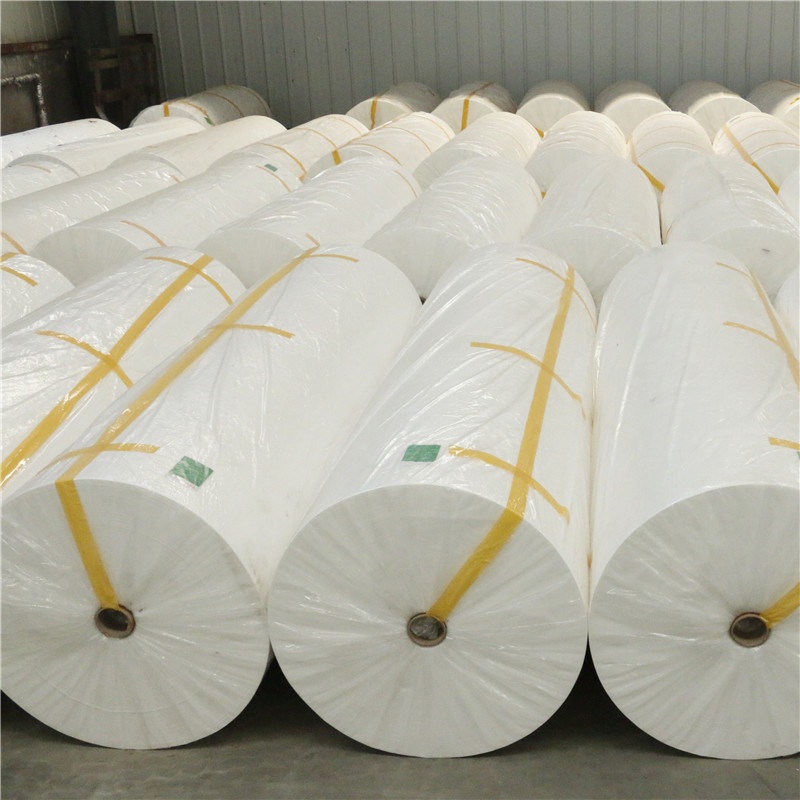
3、High strength. Polyester (PET) spunbond nonwoven fabric is second only to nylon spunbond nonwoven fabric of a filament nonwoven fabric. Good air permeability, tensile and tear resistance and anti-aging properties have been more and more people used in various fields.
4, anti-gamma radiation. Polyester (PET) spunbond nonwoven fabric also has a special physical property: anti-gamma radiation. That is to say, if applied to medical products, it can be directly sterilized by gamma rays without destroying its physical properties and dimensional stability, which is a physical property that polypropylene (PP) spunbond nonwoven fabrics do not have.
Product Parameter
Project | Specification Indicators | ||||||||||
100 | 150 | 200 | 250 | 300 | 350 | 400 | 450 | 500 | 600 | 800 | |
Quality Deviation Per Unit Area,% | -6 | -6 | -6 | -5 | -5 | -5 | -5 | -5 | -4 | -4 | -4 |
Thicknesses,mm> | 0.8 | 1.2 | 1.6 | 1.9 | 2.2 | 2.5 | 2.8 | 3.1 | 3.4 | 4.2 | 5.5 |
Width Deviation,% | -0.5 | -0.5 | -0.5 | -0.5 | -0.5 | -0.5 | -0.5 | -0.5 | -0.5 | -0.5 | -0.5 |
Breaking Strength,KN/m | 4.5 | 7.5 | 10.5 | 12.5 | 15 | 17.5 | 20.5 | 22.5 | 25 | 30 | 40 |
Elongation At Break,% | 40-80 | ||||||||||
CBR Top Break Power,KN> | 0.8 | 1.4 | 1.8 | 2.2 | 2.6 | 3.0 | 3.5 | 4.0 | 4.7 | 5.5 | 7.0 |
Equivalent Pore Size,mm | 0.07~0.2 | ||||||||||
Vertical Permeability Parameters,m/s | 1.0~9.9 | 0.1~0.001 | |||||||||
Tearing Force,KN> | 0.14 | 0.21 | 0.28 | 0.35 | 0.42 | 0.49 | 0.56 | 0.63 | 0.70 | 0.82 | 1.10 |
Application
1. Home textile: anti-velvet lining, heat transfer printing, non-woven calendar, office document hanging bags, curtains, vacuum cleaner bags, disposable garbage bags.
2. Packaging: cable wrapping cloth, handbag, container bag, flower wrapping material, desiccant, adsorbent packaging material.
3. Decoration: wall decoration cloth, floor leather base cloth, flocking base cloth.
4. Agriculture: agricultural harvest cloth, crop and plant protection materials, weed protection belt, fruit-breeding bags, etc.
5. Waterproof material: breathable (wet) waterproof material base cloth.
6 Industrial applications: filtration materials, insulation materials, electrical appliances, reinforcement materials, support materials.
7.Others: protective products, travel products, etc.
8. Filtration: transmission oil filtration.